
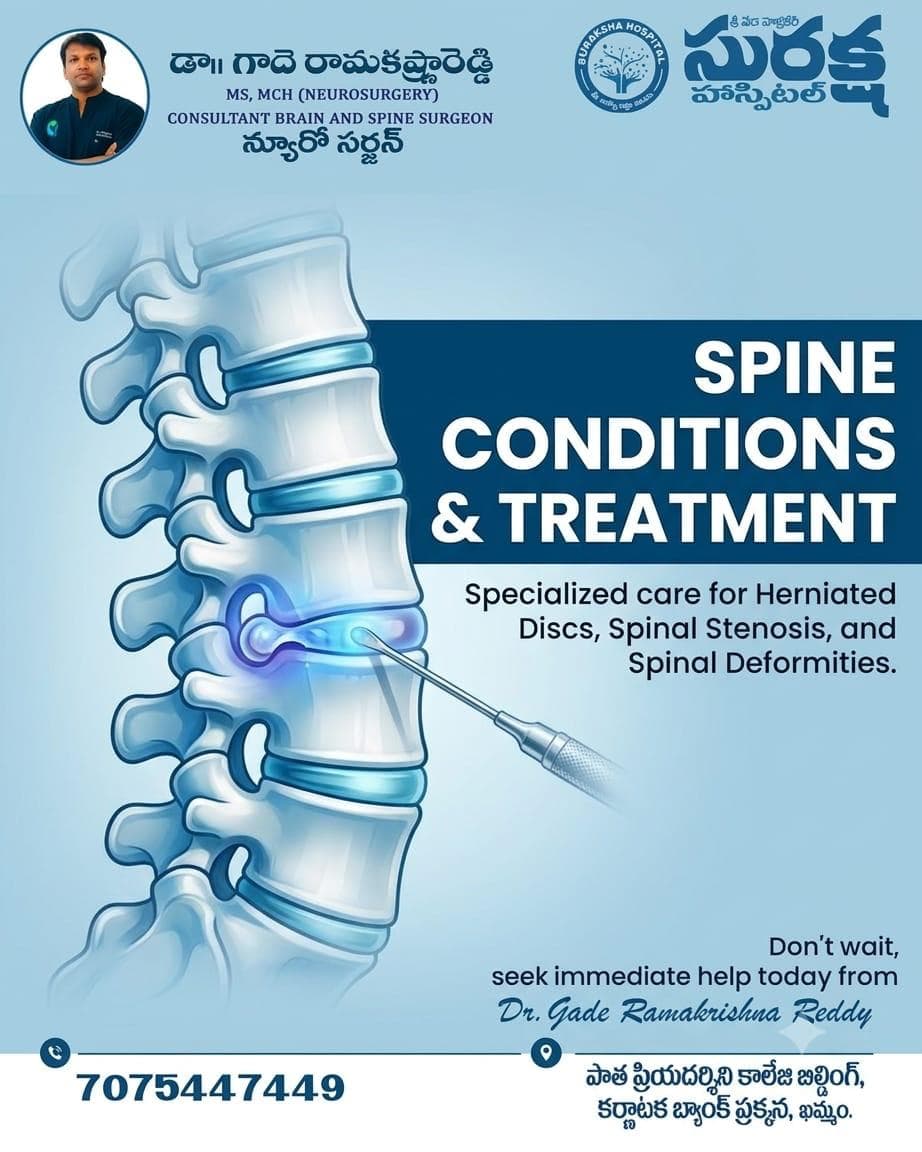
Back and neck pain are extremely common, and the great majority of episodes settle with time, movement and simple measures. But when pain persists for weeks, radiates into an arm or leg, or comes with numbness or weakness, it is worth having the spine properly assessed.
Herniated (slipped) disc
The discs between the vertebrae act as cushions. When the softer inner material pushes through the tougher outer wall, it can press on a nearby nerve. That pressure is what produces the classic pattern of pain radiating down a leg (sciatica) or into an arm, often with pins and needles or weakness. Many herniated discs improve without surgery over several weeks.
Spinal stenosis
Stenosis means narrowing of the spinal canal, usually the result of gradual age-related change. The narrowing leaves less room for the spinal cord and nerves. A characteristic symptom is leg pain or heaviness that comes on with walking and eases when sitting down or leaning forward — some people notice they can walk much further with a shopping trolley to lean on.
Spinal deformities
Deformities such as scoliosis (sideways curvature) and kyphosis (excessive forward rounding) may be present from adolescence or develop later as the spine degenerates. Mild curves often need nothing more than monitoring. Larger or progressing curves — particularly where they affect breathing, balance or cause persistent pain — warrant specialist assessment.
How spine problems are assessed
Assessment begins with your history and a clinical examination — where exactly the pain is, what makes it better or worse, and whether nerve function is affected. Imaging such as MRI is used to confirm the picture. An important principle: imaging findings are interpreted alongside your symptoms, never in isolation. Many people have disc changes visible on a scan while having no pain at all, so the scan alone never decides the treatment.
When is surgery considered?
Surgery is generally considered when conservative treatment has been given a fair trial without adequate relief, when there is progressive weakness or nerve compression, or where a deformity is worsening. Where surgery is needed, minimally invasive spine surgery (MISS) can often be used — smaller incisions, less disruption to surrounding muscle, typically less blood loss and often a shorter hospital stay. Not every condition is suitable for MISS, and suitability is assessed case by case.
This article is general health information, not medical advice. It cannot account for your individual circumstances and is not a substitute for assessment by a qualified doctor. Written and reviewed by the neurosurgery team at Suraksha Hospital, Khammam.