
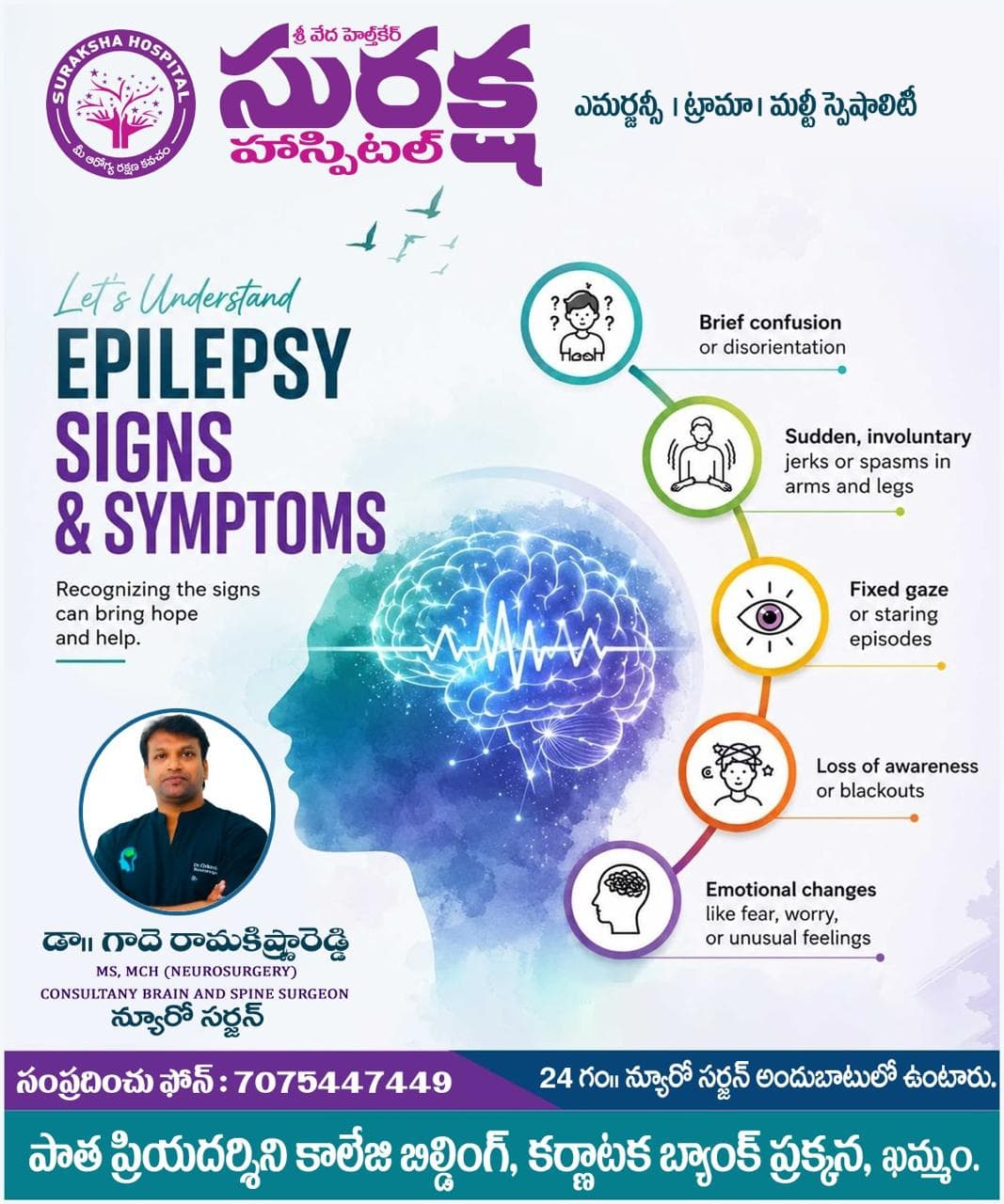
Epilepsy is a neurological condition in which a person experiences recurring seizures. It is more common than most people assume, and — importantly — it is treatable. Recognising the signs early means treatment can start sooner, and most people with epilepsy go on to lead full, ordinary lives.
Common signs and symptoms
Seizures do not always look the way they are portrayed on screen. Many are subtle and easy to miss. Watch for:
- Brief confusion or disorientation — a short period where the person seems 'absent'
- Sudden, involuntary jerks or spasms in the arms and legs
- Fixed gaze or staring episodes that cannot be interrupted
- Loss of awareness or blackouts
- Emotional changes such as sudden unexplained fear, worry or unusual feelings
What causes epilepsy?
Epilepsy has many possible causes: previous head injury, infection affecting the brain, stroke, a structural abnormality, or a genetic tendency. In a significant number of cases no single cause is ever identified — which does not make the condition any less treatable.
How is it treated?
Most people are treated successfully with anti-epileptic medication. The aim is to find the drug and dose that controls seizures with the fewest side effects, which sometimes takes a period of adjustment. Where seizures continue despite properly trialled medication — known as drug-resistant epilepsy — surgical assessment may be appropriate. This is a specialist evaluation that identifies whether the seizures arise from one area of the brain that can safely be treated surgically.
Living with epilepsy
Regular sleep, taking medication consistently, and avoiding known triggers make a measurable difference. Keeping a simple seizure diary — what happened, when, and what preceded it — is genuinely useful information for your doctor, and often reveals patterns that are otherwise easy to miss.
This article is general health information, not medical advice. It cannot account for your individual circumstances and is not a substitute for assessment by a qualified doctor. Written and reviewed by the neurosurgery team at Suraksha Hospital, Khammam.